





Introduction to Water Purification Technologies
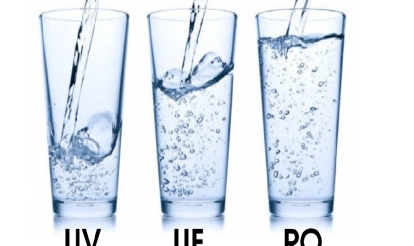
Choosing the right water purifier can be challenging, especially with multiple technologies available on the market. Among the most common options are Reverse Osmosis (RO), Ultraviolet (UV), and Ultrafiltration (UF) systems.
Each technology is designed to address specific types of water contamination. Understanding how they work and their differences is essential for selecting the most suitable solution for your home.
Understanding Reverse Osmosis (RO)
Reverse osmosis is an advanced water purification method that uses a semi-permeable membrane to remove dissolved impurities from water.
RO systems are highly effective in removing heavy metals, salts, bacteria, and chemical contaminants. They provide high-purity drinking water suitable for most urban and industrial environments.
This makes RO one of the most widely recommended technologies for modern households.
Understanding Ultraviolet (UV) Purification
UV purification uses ultraviolet light to disinfect water by killing bacteria and viruses. It works by damaging the DNA of microorganisms, preventing them from reproducing.
While UV is effective against biological contaminants, it does not remove dissolved solids, heavy metals, or chemical impurities.
This means that UV is often used as a secondary treatment rather than a complete purification solution.
Understanding Ultrafiltration (UF)
Ultrafiltration uses a physical membrane to remove suspended particles, bacteria, and some larger impurities.
Unlike RO, UF does not remove dissolved salts or chemicals. It also does not require electricity in many cases, making it a cost-effective option.
However, its filtration capability is limited compared to more advanced systems.
Key Differences Between RO, UV, and UF
The main difference between these technologies lies in the type of contaminants they can remove.
RO systems remove both dissolved and biological contaminants, making them the most comprehensive solution.
UV systems focus on killing microorganisms but do not remove physical or chemical impurities.
UF systems remove particles and bacteria but are not effective against dissolved substances.
Water Quality Considerations
The choice between RO, UV, and UF depends largely on the quality of your water source.
If water contains high levels of dissolved solids, heavy metals, or chemical pollutants, RO is the most suitable option.
If water is microbiologically unsafe but chemically stable, UV may be sufficient.
For relatively clean water with minor impurities, UF can be a simple and cost-effective solution.
Health and Safety Comparison
From a health perspective, RO systems provide the highest level of protection by removing a wide range of contaminants.
UV systems are effective against pathogens but do not address chemical risks.
UF systems offer basic filtration but may not be sufficient in areas with complex water contamination.
Cost and Maintenance
RO systems generally have higher initial and maintenance costs due to advanced filtration components. However, they provide the most comprehensive solution.
UV systems require electricity and periodic lamp replacement but are relatively simple to maintain.
UF systems are more affordable and require minimal maintenance but offer limited purification capabilities.
Modern Lifestyle and Convenience
In modern households, convenience and reliability are key factors. RO systems, especially tankless and smart models, provide continuous access to purified water with minimal user effort.
Advanced systems also include monitoring features that simplify maintenance and improve user experience.
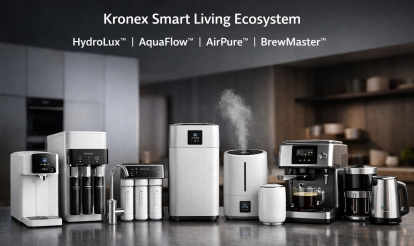
Kronex AquaFlow™ Recommendation
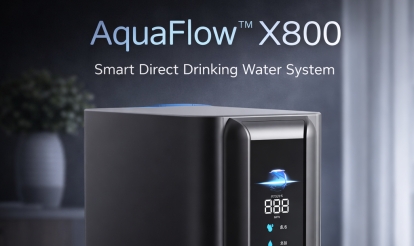
Kronex AquaFlow™ systems utilize advanced reverse osmosis technology combined with smart features to deliver high-performance water purification.
With tankless design, high flow rate, and intelligent monitoring, AquaFlow™ ensures consistent water quality and convenience for modern living.
For households seeking a complete and reliable solution, RO-based systems like AquaFlow™ are the preferred choice.
Which One Should You Choose
If your goal is maximum safety and water quality, RO is the best option.
UV is suitable as a supplementary technology for disinfection, while UF works best for low-contamination environments.
Understanding your water conditions and requirements will help you make the right decision.
Conclusion
RO, UV, and UF are all valuable technologies, but they serve different purposes. Among them, reverse osmosis stands out as the most comprehensive and effective solution for modern households.
With advanced systems like Kronex AquaFlow™, achieving clean, safe, and reliable drinking water has never been easier.